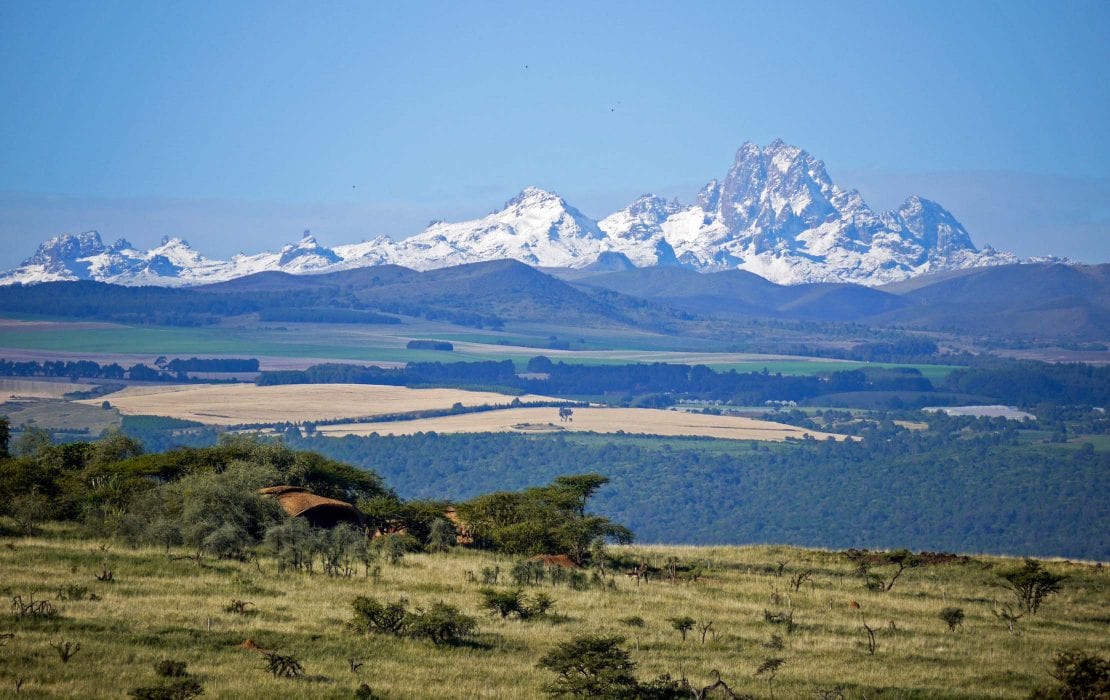
Mount Kenya National Park
Ascend the legendary Mount Kenya National Park, home to Africa’s second-highest peak (5,199m) and a UNESCO World Heritage Site. Trek through bamboo forests, alpine moorlands, and glacial valleys to reach ice-capped Batian, Nelion, and Point Lenana. Spot rare wildlife like mountain bongo, elephants,
Rising majestically from the central Kenyan highlands, Mount Kenya National Park is a natural cathedral of ice, rock, and biodiversity—a UNESCO World Heritage Site and one of Africa’s most iconic landscapes. Straddling the equator at 5,199 meters, the extinct volcano’s jagged peaks—Batian (5,199m), Nelion (5,188m), and the trekker-friendly Point Lenana (4,985m)—pierce the sky, crowned by shrinking glaciers that feed 11 pristine tarns and vital rivers below. Established in 1949 and expanded over decades, the 715 sq km park protects a vertical ecosystem spanning 7 vegetation zones, from montane forest to afro-alpine moorland.
A Journey Through Altitude and Beauty Your adventure begins in dense montane rainforest teeming with elephants, buffalo, and black-and-white colobus monkeys. As elevation increases, bamboo thickets give way to giant heather, lobelia forests, and surreal groundsel groves—plants found nowhere else on Earth. Above 4,000m, the landscape turns lunar: rocky ridges, tarns like Lake Michaelson, and the Lewis Glacier offer breathtaking vistas. Over 130 bird species, including the rare Abbott’s starling, fill the air, while endangered mountain bongos roam the higher forests.
Trekking and Climbing for All Levels Mount Kenya offers 5 official routes, each with unique character:
- Sirimon (gentle, scenic, most popular)
- Chogoria (most beautiful, with lakes and gorges)
- Naro Moru (fastest ascent, steep)
Timau & Burguret (wild, less trafficked)
Non-technical trekkers reach Point Lenana in 3–5 days; technical climbers tackle Batian and Nelion via rock and ice routes (Grade IV–VI). Huts (e.g., Austrian Hut, Shipton’s Camp) and camping options provide shelter. Best season: January–February or July–October.
Cultural and Conservation Significance The Kikuyu people revere the mountain as Kirinyaga—the dwelling place of Ngai (God). Sacred caves and cultural sites dot the lower slopes. The park plays a critical role in Kenya’s water security, feeding the Tana River. Conservation efforts protect rare species and combat glacial retreat due to climate change.
Practical Info
- Location: Central Kenya, 175km northeast of Nairobi (3–4 hr drive via Nanyuki).
- Entry Fees: ~USD 52/day (non-residents); guide/porter mandatory.
- Best Time: Dry seasons (Jan–Feb, Jul–Oct); avoid long rains (Mar–May).
- Duration: 3–7 days depending on route and summit goal.
- Facilities: Mountain huts, campsites, lodges in Nanyuki. Gear rental available.
From sunrise over equatorial glaciers to star-filled nights at 4,000m, Mount Kenya National Park is more than a climb—it’s a pilgrimage into the soul of Africa. Whether you summit Lenana at dawn or explore the lower forests, this sacred peak delivers awe, challenge, and renewal.
Available Itineraries